This year, Ukraine elected a new Verkhovna Rada, created special economic zones, and dealt with the aftermath of the global financial crisis
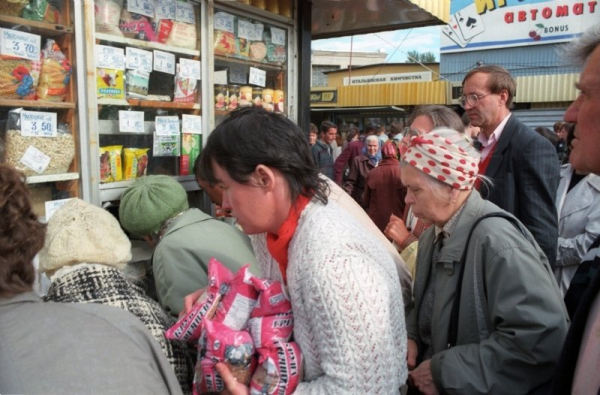
The stability and external prosperity of the economy observed in 1997 gave way to a profound crisis in 1998. It stemmed from the “Russian default,” when the Kremlin acknowledged its inability to repay debts, the ruble’s value plummeted fourfold, and the banking system teetered on the brink of collapse. At that time, Ukraine’s economy was intricately linked with Russia’s. The situation was exacerbated by the National Bank of Ukraine’s measures to restrict the money supply within the country, leaving enterprises without available funds. This triggered a payment crisis, affecting the budget among other areas, while global prices for the main export commodity – steel – concurrently declined.
50% of Ukraine’s enterprises incurred losses, compared to 12% in 1996. The economy began to exhibit semi-criminal characteristics, with the shadow sector accounting for approximately 60%. Ukraine’s external debt surged to $12 billion.
The state was unable to meet its obligations on government loan bonds. An agreement was reached to defer payments with domestic bankers and the few foreign holders. A collapse of the financial system and a declaration of default were averted.
As a significant source of budget replenishment, government loan bonds, became depleted, the country faced a payment deficit. Funds were insufficient for salaries, pensions, or maintaining the hryvnia’s exchange rate. Ultimately, a gradual devaluation of the hryvnia was decided upon, while simultaneously creating difficulties for those seeking to purchase currency. By year-end, the exchange rate had fallen by nearly half. The nation’s economy was mired in a payment crisis.
In March, the President of Ukraine issued a Decree on additional measures to compensate citizens for losses from the depreciation of their monetary savings in the Savings Bank of Ukraine and Ukrderzhstrah, utilizing compensation certificates for the purchase of shares in open joint-stock companies.
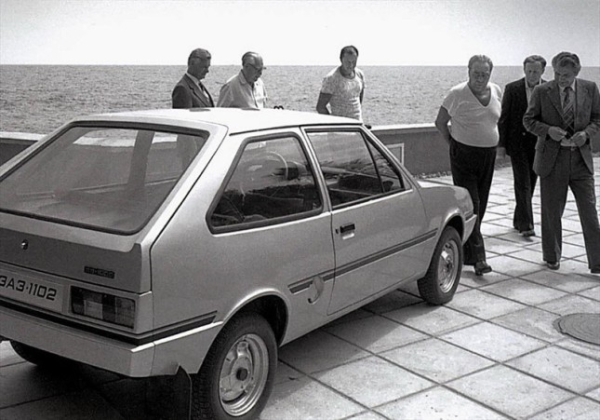
In May, the first “Tavria Nova” automobile, a modification jointly developed with Daewoo, rolled off the assembly line of the JV “AvtoZAZ-DEU.”
In August, the President issued a Decree “On the Establishment of the Presidential Distinction of Ukraine ‘Hero of Ukraine’.”
Ukraine on the International Stage
In January, Ukraine and Turkmenistan signed a Declaration on the further development of cooperation.
In January, the Agreement on Guarantees with the International Atomic Energy Agency on the non-proliferation of nuclear weapons, signed by Ukraine in 1995, entered into force.
In May, a Cooperation Agreement with the USA on the peaceful use of nuclear energy was signed, which would only take effect for Ukraine in 1999.
In February, the first state visit of the President of Ukraine, Leonid Kuchma, to Moscow took place, the main outcome of which was the signing of a long-term economic cooperation treaty between Ukraine and the Russian Federation for a period of 10 years.
A Framework Agreement with the EBRD concerning the activities of the Chernobyl Shelter Fund in Ukraine was concluded and ratified.
In April, a Presidential Decree defined the legal status of the National Agency of Ukraine for Economic Development and European Integration. A set of powers was established for interdepartmental coordination on issues of inter-sectoral economic and social cooperation between Ukraine and the European Community, participation in the formation and implementation of state policy with international financial organizations to attract loans, international technical assistance, and foreign investment.
On June 11, 1998, the Strategy for Ukraine’s Integration into the EU was adopted.
In November, the President approved the “State Program of Cooperation between Ukraine and NATO for the period up to 2001,” developed to intensify and deepen sectoral cooperation between ministries and departments of Ukraine and the Alliance’s respective structures.
Throughout the year, a number of bilateral international agreements on the avoidance of double taxation were ratified with Finland, the Republic of Indonesia, and the Republic of Macedonia.
Events in the Political Sphere
On March 29, elections to the Verkhovna Rada of Ukraine were held, in which communists secured 121 out of 450 seats. These parliamentary elections were the first to test a mixed proportional-majoritarian system, where half the seats were allocated based on party lists and the other half based on majoritarian lists.
Economic Potential
To attract investment in priority sectors of production, special economic zones: “Donetsk,” “Azov,” and “Slavutych” were established in June by Presidential decrees.
A significant step that year was the establishment by Presidential Decree of a set of measures for state support of small entrepreneurship, which, in particular, introduced a simplified taxation system for them.
In March, the procedure for financing innovative projects was established, and samples of certain contracts were approved.
In 1998, the Cabinet of Ministers of Ukraine approved the Procedure for simplifying the approval process for investment programs and construction projects, reducing the costs of their comprehensive state expertise.
A Presidential Decree established the possibility of making foreign investments during initial investment in the form of Ukrainian currency, purchased with foreign currency on the interbank currency market of Ukraine or received by a foreign investor as profit (income) from making foreign investments in Ukraine.
To reduce the interference of state bodies in entrepreneurial activity, the President signed a Decree on measures for deregulation of entrepreneurial activity in July, which clearly defined the list of executive bodies authorized to inspect the financial and economic activities of business entities on behalf of the state, the types of such inspections (planned and unscheduled), as well as the grounds and procedure for their conduct.
In July, a Presidential Decree improved the mechanism for providing humanitarian aid to Ukraine.
In October, a Presidential Decree approved measures for state support of space activities, in accordance with the State Program of Ukraine for Space Activities for 1998–2002.
In October, replacing the Presidential Decree on land lease signed in 1997, the Law “On Land Lease” was adopted. And to protect the rights of owners of land shares (paites) in the context of developing market economic relations, a separate Presidential Decree on the protection of the rights of owners of land shares (paites) in 1998 established the preemptive right to acquire rights to a land share (pait) for members of collective agricultural enterprises, agricultural cooperatives, agricultural joint-stock companies, as well as for peasant (farm) enterprises and citizens who have the right to create them.
To strengthen state control over the activities of natural monopoly entities and entrepreneurs engaged in economic activities in related markets, a Presidential Decree in November established licensing for their activities from January 1, 1999, which includes, in particular, activities related to the storage and supply of natural gas, railway track usage services, thermal energy production, oil and petroleum product transportation, centralized water supply, etc.

Tax System of Ukraine
From January 1, 1998, a mechanism for paying restructured tax debt was introduced, established by the Law of Ukraine “On the Write-off and Restructuring of Tax Debt of Taxpayers as of March 31, 1997,” adopted back in 1997.
To ensure timely and full receipt of taxes and fees, tax pledge was introduced for the first time as a way for taxpayers to settle tax arrears.
In June, a Presidential Decree established the conditions for writing off and restructuring tax debt for agricultural enterprises and sugar factories. Alternative taxation systems were adopted: a single tax and a fixed agricultural tax.
In August, a Presidential Decree introduced certain changes in the taxation system. The rate of mandatory social insurance contributions was set, and new conditions for VAT taxation and cases of exemption from its payment were defined.
In May, a Presidential Decree on excise taxpayers and the procedure for its payment was signed. At the same time, a Presidential Decree regulated the collection of excise tax on ethyl alcohol and alcoholic beverages.
Monetary Policy in Ukraine
In 1998, the situation in Ukraine’s money market deteriorated. The government pursued an insufficiently balanced policy regarding the development of the government securities market. Due to the deepening crisis in global financial markets, capital continued to flow out of Ukraine. The country did not receive external financing (IMF and World Bank loans). At the end of summer, a sharp devaluation of the hryvnia began, triggered by the crisis in the Russian financial market. The Cabinet of Ministers and the National Bank of Ukraine took a series of measures to stabilize the situation. In particular, they carried out the conversion of domestic government loan bonds, established new parameters for the currency corridor, made changes to the procedures for conducting banking operations, especially in the currency market (and additionally, imposed restrictions on the sale of foreign currency to individuals, suspended foreign currency lending, set limits on the purchase of foreign currency by non-resident banks, and introduced mandatory sale of currency proceeds for the benefit of residents).
This year was marked by the adoption of a new reporting format based on international accounting standards across the entire banking system.
At the end of summer, due to the deteriorating state of public finances, the Cabinet of Ministers proposed that investors voluntarily exchange domestic government loan bonds of 1997–1998 for conversion domestic government loan bonds (KODVP) of 1998.
Banking System
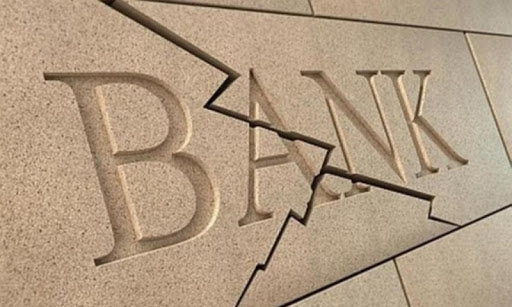
During this period, the banking system significantly strengthened. However, due to the Asian financial crisis, 10 banks were liquidated.
Furthermore, the ability of commercial banks to continue their operations also depended on their compliance as of January 1, 1998, with the charter capital amount, which had to be at least the equivalent of 1 million ECU. Therefore, banks that did not meet these requirements by the specified date were at risk of losing their banking license from the NBU.
Four banks, due to insufficient charter capital, had to merge with other banks and cease their operations, thereby enabling their successors to continue banking activities.
As of August 1, 1998, 27 commercial banks with foreign capital participation operated in Ukraine. This group included the current OTP Bank (originally “RBU Bank”), which was established in 1998.
The NBU adopted resolutions regulating issues of the creation and registration of commercial banks, the procedure for licensing banking activities, as well as rules for the use of cash foreign currency by residents and non-residents on the territory of Ukraine.
In July, the President signed a Decree on the protection of banking secrecy, according to which banks were prohibited from opening anonymous currency accounts for individuals and conducting operations on accounts opened before the entry into force of this Decree. The circle of persons to whom a bank could provide certificates about its clients’ accounts was also established.
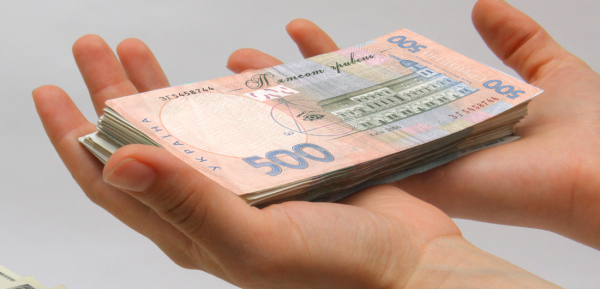
A significant event that year was the establishment of the Deposit Guarantee Fund for Individuals, aimed at protecting the interests of individuals – depositors of commercial banks, and enabling them to be reimbursed in case of banks’ inability to meet depositors’ claims for fund repayment. According to the Presidential Decree adopted in September of that year, the amount of reimbursement for a deposit and interest was set at no more than 500 UAH.
Read also:
1997: Ukraine in Space and the First McDonald’s in Kyiv
1996: Adoption of the Constitution and Introduction of the Hryvnia
1995: Large-scale Privatization, Domestic Government Bonds, and Early Bank Bankruptcies
1994: New President, Financial Crisis, Land Shares, and the First Gas War
1993: Miner Protests, Currency Depreciation, and the First Mobile Communication
1992: Symbols of an Independent State, the CIS, and the Beginning of Cooperation with the IMF
1991: Pavlov’s Reform, Collapse of the Soviet Union, and the Ruble’s Crash
More news and current materials from Investory News in our Telegram channel
Kateryna Zhuk
- 30 steps to Independence
- Asian crisis
- bank bankruptcy
- default
- OVDP
- taxes
- politics
1 March 2021to news
Context
News
Companies Paid 11.3 Billion “Google Tax” in Seven Months
Revenues increased by 15%
12 August 202652
News
International Reserves Decreased by 0.1%
In July, their volume fell to $51.2 billion
10 August 202666
News
Ukrainians’ Investments in Domestic Government Bonds Reached a Record 2 Trillion
In July, citizens’ investments in bonds increased by over 9.3 billion
5 August 2026150
News
Ministry of Finance Raised Over 9.4 Billion from OVDP Sales
Hryvnia bonds with a term of 3.6 years brought the most revenue
29 July 202678
News
The War in Iran Has Already Cost the US Over $37 Billion
The Pentagon estimated the cost of the US war in Iran ahead of the elections
23 July 202683
News
Ukrainians Paid Over 94 Billion in Military Levy in the First Half of the Year
Revenues from the levy increased by a quarter
21 July 202688
News
ECS Revenues Increased by 18%
In the first half of the year, 371 billion hryvnias were received
16 July 2026102
News
Ukraine is Experiencing Growth in Fiscalization Levels
The amount of transactions conducted through POS terminals increased by 18.3%
13 July 2026109
News
Local Budgets Received Over 274 Billion in the First Half of the Year
The largest source of funding was personal income tax
10 July 2026108
News
Over 717 Billion Reached the General Fund of the State Budget in Half a Year
The indicator increased by almost 11% compared to last year
7 July 2026131
News
Ukrainians’ Investments in OVDP Grew to a Historical High
As of July 1, the volume of population investments was 150 billion
3 July 2026183

News
Tax on Income from Apartment Rentals Reduced to 5%
This will bring the rental market out of the shadows and ensure the rights of market participants
11 June 2026177
News
Trump’s Excessively High Work Visa Fee Deemed Illegal
The President does not have the authority to impose such taxes
10 June 2026162
News
Law on Taxation of Digital Platforms Adopted
The law is expected to come into effect in 2027
10 June 2026263
News
Elon Musk Exempted from Property Tax for Terafab Plant
A tax benefit was granted for 35 years
8 June 2026182
News
Kyiv Residents Received 324 Billion in Income
08:483
Jeff Bezos Became the Owner of One-Third of FC Liverpool
17.08.202623
NBU’s Net Reserves Decreased to $36.3 Billion in July
17.08.202613
OpenAI Projects Annual Revenue of $40 Billion
17.08.202615
Banks Reduced Net Profit by 32% in the First Half of the Year
17.08.202614
Revenue in Cafes and Restaurants in Ukraine Increased by 3% in Seven Months
14.08.202620
Coffee Exports from Colombia Have Practically Halted
14.08.202620
Number of Securities Investors Increased Almost 12-Fold in Four Years
14.08.202641
Boeing’s Subsidiaries to be Acquired by an Air Taxi Manufacturer
13.08.202636
Los Angeles Lakers Sold for $12.5 Billion
13.08.202636More News
-

IN BEST: The Most Expensive Cars in the World in 2023
-
The World’s Most Expensive Rare Gems
-

Best Residential Complexes in Kyiv 2022
-
Unique Ukraine: Lakes That Amaze with Their Beauty